
Enterprise Website Redesign as a Systems Alignment Initiative
Challenge
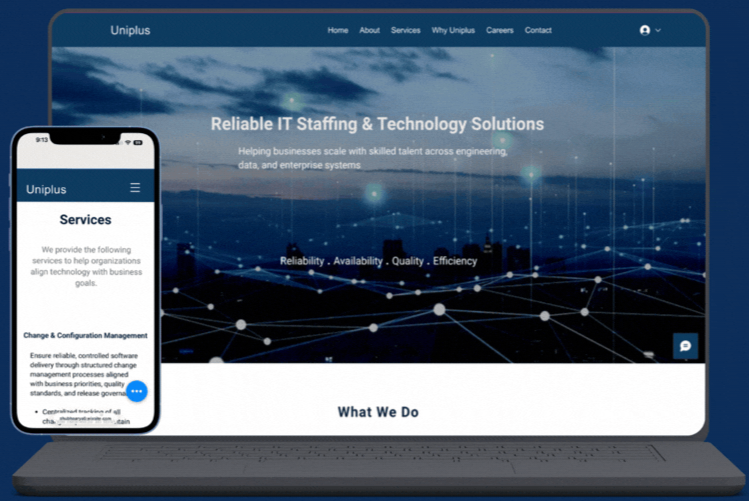
The Uniplus website, unchanged for over 10 years, was outdated, content-heavy, and misaligned with evolving business goals, limiting its ability to communicate value, support recruiting, and engage potential clients.
My Role
Led end-to-end product and experience design, reframing the website redesign as a business systems alignment initiative to address misalignment across stakeholders, content, and operational workflows.
Impact & Outcomes

Navigation reduced from 3 → 1–2 clicks, streamlining access to key information
Navigation
Pages
Service architecture simplified from 8 → 5 pages, reducing complexity

Time
Time to clarity reduced from 30 → 10 minutes, accelerating decision-making

+30% projected increase in qualified leads through improved structure and messaging
Leads

Content
40% reduction in content, improving clarity and scannability
Key Screens
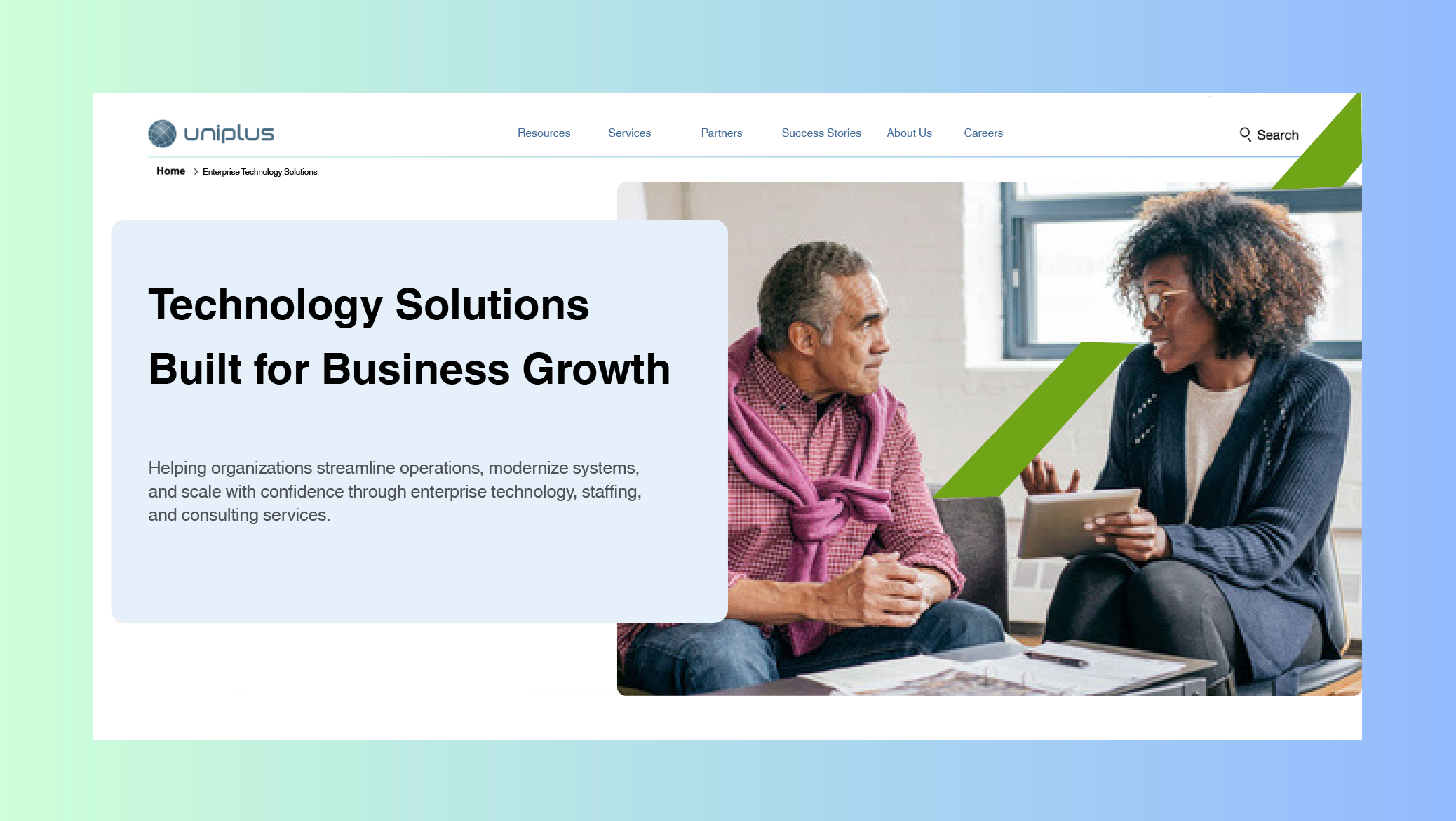
Enterprise Website Experience
Redesigned the public-facing website to improve service discoverability, simplify navigation, and communicate Uniplus’ technology, staffing, and consulting capabilities more clearly.
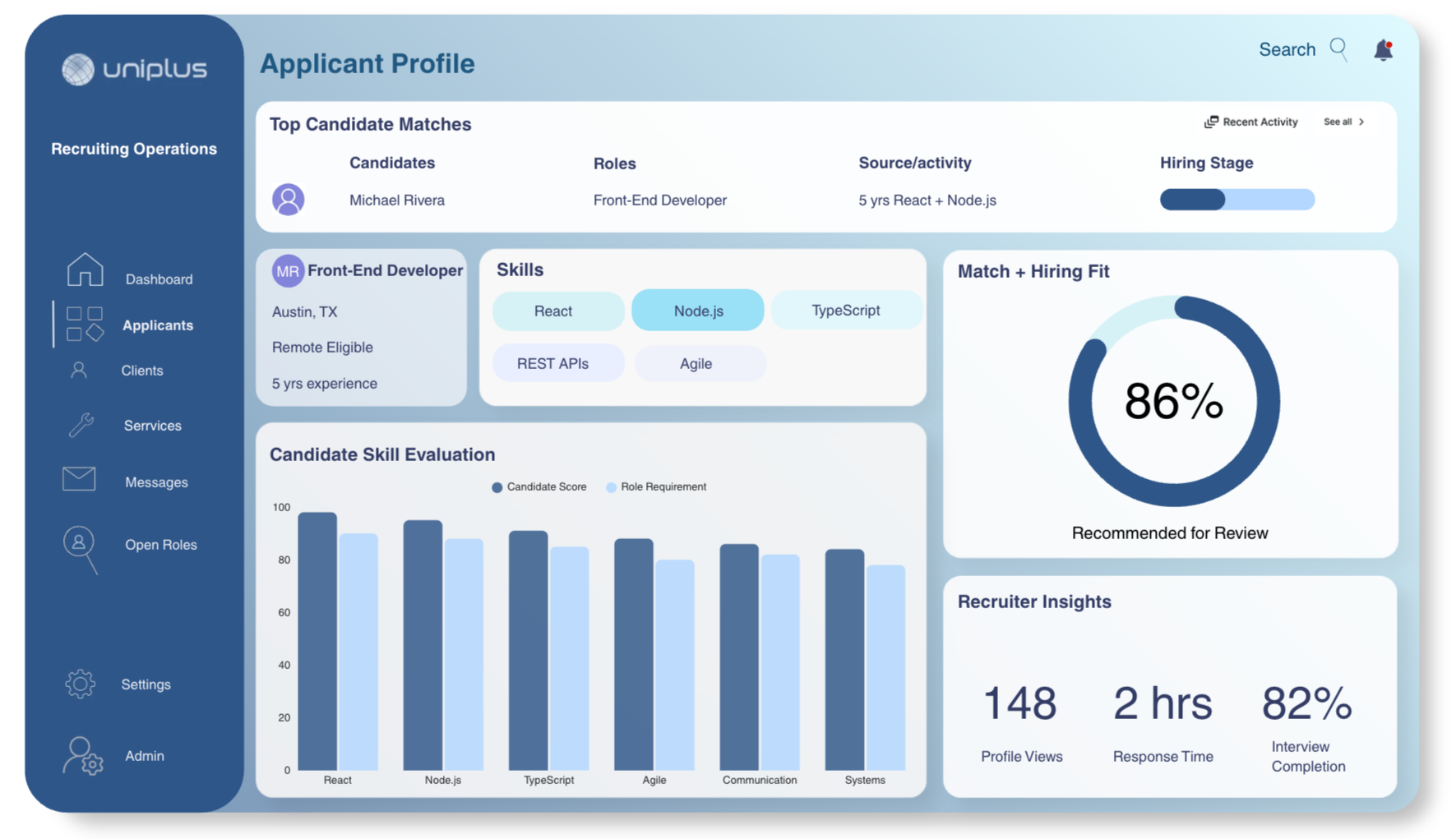
Candidate Evaluation Workflow
Created a candidate management experience that surfaces skills, match scores, recruiter insights, and hiring recommendations to support faster decision-making.
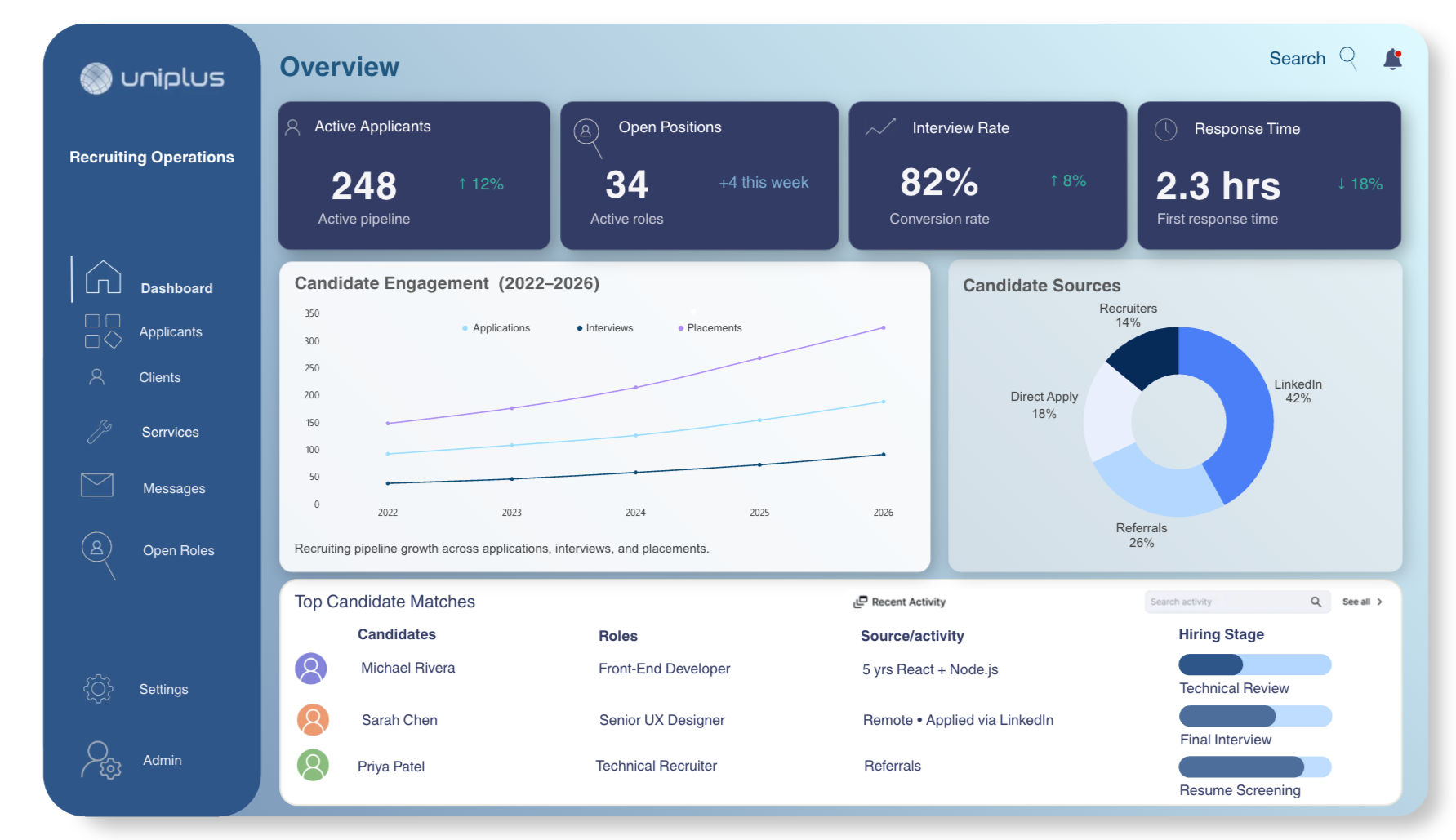
Recruiting Operations Dashboard
Designed a centralized dashboard that enables recruiters to monitor candidate pipelines, engagement metrics, hiring stages, and operational performance in one place.
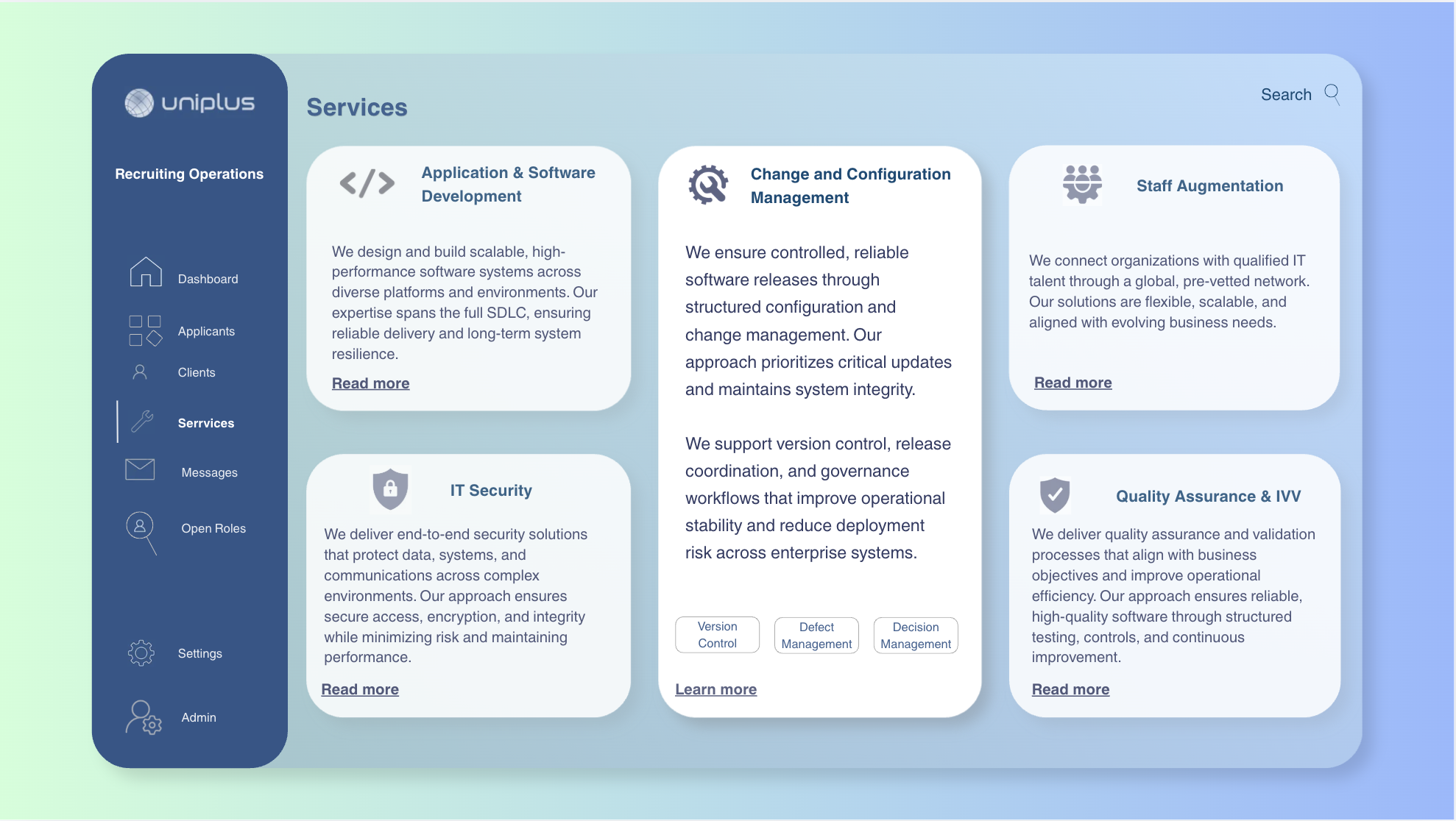
Service Discovery System
Structured complex service offerings into a scalable information architecture that improves readability, navigation, and service understanding.
Business Impact

Service Discoverability
Improved visibility and lead generation

User Clarity & Navigation
Simplified navigation and content structure
System Efficiency
Reduced complexity through scalable design
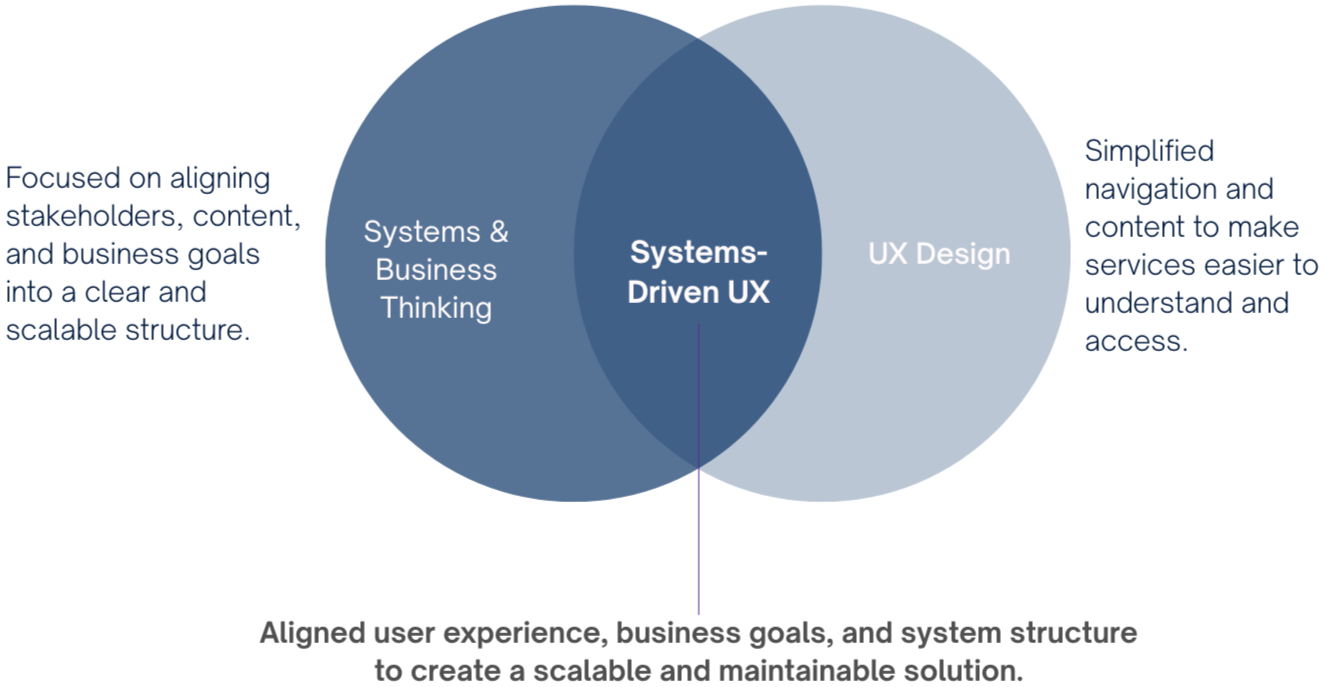
Business outcomes were driven by aligning systems thinking with user experience decisions.
Stakeholder Ecosystem
Engineering
“Requires a system that is easy to maintain and update”

Leadership
“Requires the website to reflect credibility and expertise”

Sales & Business Development
“Requires a clear way to communicate services to potential clients”

Recruiting & HR
“Requires candidates to quickly understand roles and company”

Marketing
“Requires clear communication of services and brand”
AI in the Process
Design: Used AI to support design decisions, structure content, and streamline early-stage exploration
Business: Leveraged AI to improve operational efficiency and enable scalable content and system management
Design Process

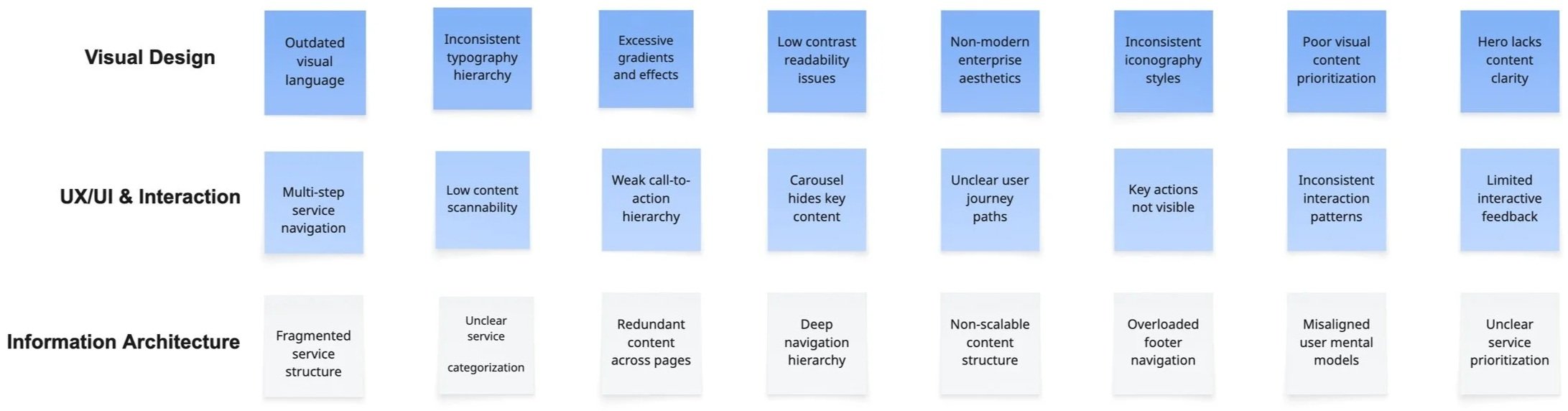
Insight Synthesis
Identified patterns across content and user needs to inform clearer system structure
Information Architecture
Tested and refined navigation models to improve clarity and scalability

Iteration & Speed
Accelerated iteration cycles by quickly generating and evaluating alternatives
Business System

System Efficiency
Reduced manual effort in structuring and maintaining content
Example prompts AI:

Decision Support
Enabled faster, more informed decisions through structured insights
“Propose alternative navigation structures for an enterprise staffing website, align with 2026”
“Identify redundant content across service pages and suggest consolidation strategies”
Scalability
Supports growth by making content and systems easier to extend and manage
“Benefits of adding a hero video to replace 4 images on home screen”
Synthesis: Key Insights & Design Journey
Home Page
Design Journey

Design Approach
Key Takeaways
Simplifying structure, improving clarity, and aligning with business needs were critical to creating a scalable and effective user experience.